The way we see Sachin…

Sachin enters the pitch.
Commentator: And this is the 50,000th time Sachin is entering a cricket pitch!

Sachin waits at the non-strikers end looking at Sehwag.
Commentator: And this is the 250th time Sachin is at the non-striker’s end!

Sehwag hits the ball and Sachin runs.
Commentator: And this is the 15,000th time Sachin is running a run for his partner.

Sachin plays a dot ball.
Commentator: And this is the 20,000th dot ball Sachin has played in his life!

Sachin hits a 4.
Commentator: And this is his 2000th ODI 4 and 3000th overall!

Sachin takes a single.
Commentator: And this is his 5000th single, what a record! What a player!

Sachin sips water from a bottle.
Commentator: And my statistician has just informed me that Sachin has just completed 20 years, 20 weeks, 20 days, 20 hours and 20 minutes of his international career! Wow! Gush!

Sehwag hits a 6.
Second Commentator: And what a glorious shot! Whenever…
Our original commentator cutting him short: …Sachin plays alongside him, Sehwag plays his best! What an inspirational player Sachin is!

Sachin…
Commentator

Moral of the story: Most surveys will show Sachin Tendulkar to be the greatest cricketer of all time. But there are other not so invisible players who do great deeds and a team’s victories are greater than the sum of all records.

© Sunil Rajguru

New Revised Golf Glossary…

Birdie: Synonym for “Girlfriend”. In this usage it means: Having one girlfriend over par.
Eagle: Having two girlfriends over par.
Albatross: Having three girlfriends over par.
(This may also end up hanging around your neck.)
Condor: Having four girlfriends over par.
Tiger: Having an unlimited number of girlfriends over par.

Ace: A golfer who is also a hit with the girls.
Aggregate: The total number of hits a golfer has made with girls.
Aim: The direction in which your (female) target lies.
Alignment: Adjusting your secret personal life with your golfing life.
Back Nine: Remembering the last nine girlfriends in your life.
Bare Lie: A golfer telling everyone that he is a happily married man.
BIGGA: British and International Golfers & their Girlfriends Association.
Bye: A short game played because one has to leave early to go for a secret date.
Closed Stance: Hiding one’s personal details from the world at large.
Fore! The exclamation you yell before a golfer crashes into a fire hydrant.
Funnies: Used to describe various achievements in a golfers life, both positive and negative.
Handicap: Being unable to being a hit with the girls.
Pro: Synonym for ace

This Version By Sunil Rajguru

Ji Huzoor…

Centre: Hum weak ho rahe hain!
Advisor: To phir regions ko aur bhi weak kardo!
Centre: Us-se kya hoga?
Advisor: Aap bahut strong ho jaoge.
Centre: Kya bakwas kar rahe ho! Regions weak ho jaayenge to hum bhi weak ho jayenge.
Advisor: Einstein ka naam nahin suna?
Centre: Kis kambhakt puraane British politician ka naam le rahe ho?
Advisor: Woh… chodo… Relativity kahata hain ki agar doosre weak hote jaate hain to aap relatively strong hote jaate hain…
Centre: Einstein ko maaro goli, ye Relativity bhai sahab bahut acche lagte hain.
Advisor: To amal kiya jaaye… regions ko chote chote tukdo main baat do.
Centre: Todo, todo, regions ko todo… as a first step… us ka Fast todo.
Advisor: Ji huzoor.

(Moral of the story: In 1947 there were 17 provinces in India. In 1975 there were 21 states. Today there are 28. Tomorrow there will be 35. First thoda resistance and finally our kids will mug up the new names quietly for their GK test and we’ll happily help them.)

***

Hamare batsman acche hain, Rules se bowlers ki jaan lelo
Ji huzoor…
Ye
Chucker ka chakkar chodo
Ji huzoor…
Woh
Pak nahin khelega..
Ji huzoor…
Hame
T20 nahin khelna hain…
Ji huzoor…
Chalo
T20 khel hi lete, domestic bhi
Ji huzoor…
Acha chalo do aur
Test hi khelte hain…
Ji huzoor…

(Moral of the story: Who cares about the ICC Test/ODI/T20 rankings when India has been the undisputed No. 1 in the Unofficial Cricket Power Rankings for ages now and continue to do so)

© Sunil Rajguru

8 suggestions for the ICC…

I’m no expert, but as a humble cricket fan, here are my 8 suggestions to the International Cricket Council regarding changes I would like to see in international cricket:

1. Overhaul the entire umpiring system: A few hundred million people know whether the batsman is out or not. And the batsman, bowler and umpire don’t know it. That has desperately got to change. The third umpire brought some confusion and referrals didn’t help matters. How many referrals should be there? Three? Logically shouldn’t every decision be referable? So, why not re-engineer the whole concept of the field umpire and TV umpire? In short, the Third Umpire becomes the First Umpire.

Before you totally dismiss this offhand, here’s my proposal on how it should be done:

Imagine a room with 4 big screens and one big screen assigned to each umpire. Each umpire would be assigned just one task and his job would be to pass on that decision instantaneously to the field umpire via earphone or a flashing hand panel.

No Ball Umpire: Would just see whether it is a no ball or not. If so, he would have to immediately beep to the field umpire.
Wide Ball Umpire: Would just see whether it is a wide ball or not. If so, he would have to immediately beep to the field umpire.
LBW Umpire: Would check if the ball has hit the bat or pad or both and calculate the hawk-eye trajectory and beep the umpire immediately if it’s an LBW. (This could take time and maybe could have a referral system initially)
Fielding Umpires: Would check the validity of catches, 4s & 6s and run outs.
Chief Umpire: Would monitor all the umpires and would be from the current Elite Panel.
Field Umpires: Would either take the instructions through earphone instantaneously or there would be a remote panel, which would flash for No balls, Wide balls, LBWs, etc.

Now the field umpires would be made free to concentrate on other things like:
1. Discipline: Most of the discipline has to be decided on the spot. This should be the field umpires chief responsibility as all other decisions have been outsourced.
2. Chucking: Who better than the field umpire knows whether a ball has been chucked or not? The field umpire should be empowered towards that effect. He can best tell if the elbow has been used to impart energy to the ball or not. If a team opposes the decision, then it would be reviewed by an elite panel of umpires, but off the field.

2. Bring forced declarations into Tests: Despite all the innovations in Tests, a draw rules most of the time. If the pitch is too batsman friendly, then the batting meanders on. If the pitch is too lethal, then the game is over in three days and still everyone feels cheated. One way to change this would be to bring a forced declaration in the first innings only. That is, the batting team would have to declare after 160 overs. This will ensure that the second team bats on the second day. And mainly, the “limited” (or nowadays the “T20”) element would come into Tests. Teams would be forced to plan and regulate their innings and the best part would be if the batting team lost just 4-5 wickets after 140 overs. You would have a fine legal T20 blast in the middle of a Test match. Howzzat to liven up things?

3. Regulate ad breaks: How irritating isn’t it when your team’s bowler takes a wicket and they immediately go in for an ad break. The same thing happens when your batsman hits the winning shot. Right now if there are 100 overs, there are 100+ ad breaks. 20 more if wickets fall between overs. All I’m proposing is that the ad breaks be brought down by just 10-15%.

The Ad Break Regulation Rule: Whenever an opposition wicket falls or a home player hits a 4 or a 6, the ad break gets cancelled, especially if it happens to be the last ball of the over. Moreover, ad breaks are cancelled for 3 minutes after the victory moment.

The ad revenue would go down by a fraction but viewing enjoyment would go up by leaps and bounds.

4. Restrict Tests & ODI WCs to 8 nations: Let’s face it: Test cricket belongs to 8 nations only. The others will never catch on. Bangladesh and Zimbabwe are the prime examples. And now with the advent of T20s, it seems even more remote. Stick to the Permanent 8 permanently. And in ODIs, stop tinkering with the format. The 2003 World Cup went on for ages and in the 2007 World Cup, India and Pakistan were kicked out after playing just 3 matches each. The best format was the 1992 World Cup where only 8 teams were called and everyone played everybody. That was exciting and that should be the permanent ODI WC format.

5. Promote T20 in 32 nations: T20 is where the future is and where more countries can come in and compete competitively. In the T20 WC, you can have 16 teams. The ICC can stop promoting Tests and ODIs ranked 9-32 and actively propagate T20s. Have T20 series, triangulars, tournaments… T20 is the only form where the whole world can catch on and the ICC should go all out for that.

6. Have a Test World Cup: You’ll need only 9 Test matches to pull this off in a period of 2 months. Only the top 4 teams should be called and the semi finals and finals should be a 3-match series each. The No. 1 & 2 ranked teams would be the host nations for the semis and the No.1 nation for the final. That would ensure a sell-out crowd for the semis and even if the No. 1 team doesn’t reach the finals. The television ratings would still be high and it would be a commercial success.

7. Ban ODI triangulars and have T20 ones instead: One of the biggest failures has been the triangular ODI where usually a third weak team is called and the finals become a foregone conclusion. Why not have triangular T20 tournaments in every tour. In fact, a tour could be standardized. Say first have a T20 triangular followed by a 3-match ODI series followed by a 4-match Test series.

8. Set up an ex-Players Super Committee: Right now great cricketers are spread out in various roles in a disjointed way. Others criticize it from the outside. The best way to counter that would be the consolidation of great ex-payers. The Top 8 Test playing nations should nominate 2 players and set up a Super Committee of 16. While the current ICC management would remain the same, this committee would guide policy and handle tricky and controversial issues.

Parting Shot: I personally would want ODIs to be abolished and First Class games to be lessened.

The future belongs to Tests and T20s.

© Sunil Rajguru

How to play cricket with a hockey stick and some old socks

sticks-310488_1280Take a few old socks. Roll the first one into a ball. Take another and wrap it onto it carefully so that the shape is maintained. When it reaches the correct size, stitch the final socks neatly so that you are left with a very strong and sturdy ball…

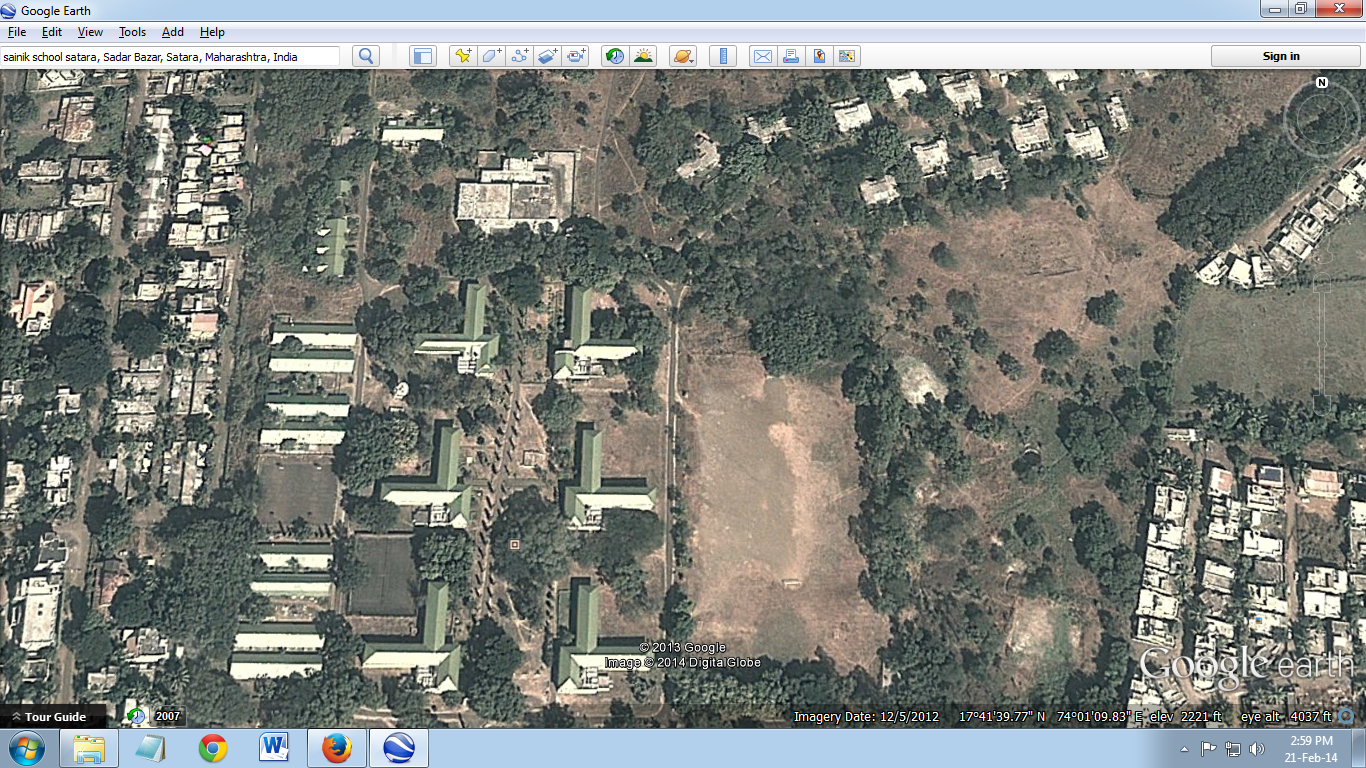
But I am getting a bit ahead of myself. Why would you want to convert old socks into a ball anyway? Necessity, they say, is the mother of invention. There was no shortage of necessities and no shortage of inventions at Sainik School Satara, for the hundreds of boys away from home. One was the necessity to play cricket. Footballs, football grounds and football sessions were abundant. After football, basketball and hockey ruled. Swimming and horse riding were regular affairs too. The only problem was cricket. There were simply not enough balls, not enough bats and definitely not enough sessions in our packed hostel routine.

But we wanted to play cricket. So one genius had a brainwave. What was the one thing that every hosteller had? A hockey stick! What was there no shortage of? Old socks! And what could we find in every study room? Chairs. So the game of hockret (hockey+cricket) was invented (most people pronounced it as hockrate, but I think I’ll stick to hockret). (I think the game could also be called sockret. In that case, the inventor would be Sockretis)

The game is played thus: The back of a chair serves as a wicket. The freely available hockey stick replaces the rare cricket bat. And our good old hockret ball (as mentioned in the introduction to this article) replaces the cricket ball. All the other rules are more or less the same. Now there are many advantages of the hockret ball. What happens when it hits a window? Voila! It magically bounces off! What happens when it hits someone? It pains for maybe not more than 30 seconds. What happens when the ball gets lost? No need to buy a new one. You just pool in your stock of old socks and sit together and stitch up a new one. Luckily, enough of us could handle a needle and a thread to make sure that hockret balls were never in short supply. They were better, cheaper and safer than even tennis balls. So we could set up a game of hockret anywhere: On the road, in a small alley, in a ground or even on the boxing ring.

Hockret also came with its own set of innovations. One of them was to counter the contentious LBW rule. Nobody ever wanted to be an umpire and if anyone ever became one, he was just short of having his head knocked off by a dissenting hockeystickman. What were we to do? Even TV replays and Hawkeye together have eluded consensus among commentators, so what hope was there for us always fighting mere boys? Someone came out with the bright idea of the Rule of Three. “Let the ball hit the leg two times and all is forgiven. The third time it will be out.” It doesn’t matter if the ball would have hit the stumps or not. Three chances is all a batsman got. Not only was this proposal accepted, it was a roaring success. It also gave you the freedom to kick the ball out of harm’s way if the hockret ball was heading towards the stumps.

Hockret allowed you the freedom to chuck. That way, it was more like baseball, since the hockey stick is also pretty thin, like a baseball bat. It let someone like me, who was a failure at playing the “propah” game of cricket, a chance to finally get a few wickets and hit a few boundaries. I still can feel  the grip of a hockey stick and the pleasure of clobbering a soft ball.

Over time, we found that NCC stockings also led to tougher and heavier balls and the dynamics were also different. (Just like Kookaburra versus Dukes balls!) If the ball fell in water, it became all the more unpredictable. Not only was it heavier, it would hit really hard if it came on to you and splash water all around. So hockret’s only disadvantage was that we couldn’t play it when it rained. Mud made it totally unplayable and that’s something that couldn’t be simply wiped off like a leather ball. Football still ruled the monsoon season.

What really made things addictive, was indoor hockret. We had dormitories with 13 beds on each side, so they had pretty long corridors. People started playing in the dorms and that could be done at any time of the day and night (Of course one had to be evading authorities all the time). At times they lasted all day. I think one batsman even claimed to have made a thousand runs in a day! Brian Lara, eat your heart out. Some of us would even play this during our study holidays before the exams. I think it did lead to some of us getting fewer marks than we ought to have.

The hockret we played showed no resemblance to Test cricket or even the one-day variety. The bowler would try to get a wicket with every ball or at least stop the ball from being clobbered. The batsman would try to hit every ball for a 4 of a 6. In fact I think the current T20 is the game closest to our good ole hockret. That’s T20 cricket + baseball + hockey. No wonder it was so irresistible!

I wonder if they still play hockret at our old school or has it become extinct by now.

© Sunil Rajguru

Sainik School Satara Houses and Mess

Books and Authors: The Cricket Series

Post-2009 T20 World Cup Special…

Great Expectations — Anonymous Indian cricket fan

A House Divided — Anonymous sports TV reporter

A Burnt Out Case — Anonymous Indian player

A Farewell to the Cup — Mahendra Singh Dhoni

Chronicle of a Defeat Foretold — Another anonymous sports TV reporter

Paradise Lost — Another anonymous Indian Fan

The Fourth Estate and How I Could Kill Them Right Now — Mahendra Singh Dhoni

Heartbreak House — Yet another anonymous Indian Fan

Dhoni’s Last Sigh? — Yet another anonymous sports TV reporter

Everybody Loves a Good Defeat (or How to Create Controversies and Make TRP Ratings Soar) — Anonymous

Decline and Fall of the Indian Empire — Ravi Shastri

Three Mediamen and the new Apocalypse — Ajay Jadeja

Circle of UnReason — Navjot Singh Sidhu

Nice Guys Finish Second — Tillakaratne Dilshan

IPL2 Special…

The Devil Wears Baggy Greens — Sourav Ganguly

The World is Flat: I Can Host the IPL Anywhere I Like — Lalit Modi

Letters from the Field — An anonymous KKR blogger

The Diary of a Frank Blogger — The very same anonymous KKR blogger

Spycatcher: How I Caught The Anonymous Blogger, Kicked Him Out and Still Finished Last in the Table — John Buchanan

Midnight’s Children: The T20 Generation — Lalit Modi

The Prince Becomes the Pauper — Sourav Ganguly

The State of Pakistan Series…

No Passage to India — Ijaz Butt

No Train to Pakistan — Sharad Pawar

100 Months of Solitude: The Future of Pakistan Cricket — Imran Khan

All’s Well That Ends Well — Shahid Afridi

The Waste Land: A Story of Stadiums Around Pakistan — Javed Miandad

Apocalypse Not Now (I Hope!) — Imran Khan

Arms and the Cricketer — Anonymous Taliban soldier

Asian Drama — ICC

All of Us in Terrorland — Mahela Jayawardene

Man of Destiny — Younis Khan

Pakistan: The Gathering Storm — Imran Khan

The Lost World (and How Pakistan May Become It) — Ijaz Butt

General Reading

Mother — Geoffrey Boycott

Red Earth and Pouring Rain — Frank Duckworth & Tony Lewis

Cricketers are from Mars, Fans are from Venus — Rahul Dravid

Such a Long Journey — Sachin Tendulkar

Far from the Madding Crowd — Rahul Dravid

Heat and Dust and Bombs: My India Tour Story — Kevin Pietersen

Heir Not So Apparent — Yuvraj Singh and Virendra Sehwag

The Affluent Society: How the BCCI is Choking Cricket — ICC

The Far Pavilions — Sourav Ganguly

The Merchant of Mumbai — Jagmohan Dalmiya

The Moon and SixSixes — Stuart Broad

The Way to Dusty Death: How To Spin on Indian Soil — Harbhajan Singh

Lord of the Singhs — Yuvraj Singh

The Real Lord of the Singhs — Harbhajan Singh

The Real Lord of the Singhs Slapped Me! — Sreesanth

Pride and Prejudice — Mike Denness

1983 A Cricket Odyssey — Kapil Dev

Odyssey Two: 2007 — Mahendra Singh Dhoni

Odyssey Three:___—Coming soon…

© Sunil Rajguru