
Winds of change

No head of Russia/USSR/CIS is safe and his ideologies are far from eternal. Lenin (who ruled from 1917-24) was the first head of state of the Soviet Union. When Stalin (1924-53) came to power, he disregarded most of Lenin’s ideologies and proved to be a solid dictator for 29 years. After that came Khrushchev (1953-64) who decried Stalin’s style of ruling and introduced glasnost and perestroika. Brezhnev (1964-82) was totally opposed to any such ideas and reacted with a coup when Khrushchev was holidaying in Crimea. He destroyed all the foundations of reform, which were laid by Khrushchev and was a Communist to the very depth of his soul. Then Yuri Andropov (1982-84) who was more or less a moderate, came, and after him Chernenko (1984-85) a staunch hardliner.

So the union had been alternating between a hardliner and reformist for most of its time and each leader attacked his immediate predecessor. Gorbochev (1985-91) went many steps further and attacked all of his predecessors right up to Lenin and was responsible for dismantling Communism in the Soviet Union. After that, for a very brief period a hardliner, Yanayev took over. Now we have Yelstin, who was supposed to be a champion democrat, but he is also in deep water and his position is far from safe, with everyone including his Vice-President attacking him.

Yesterday, today or tomorrow—no Russian leader is sure of respect and approval from his future generation.

(This appeared as a Letter to the Editor in The Times of India in 1991)

Refusing to yield

After the collapse of the USSR, America had expected India’s position to be at her mercy and everybody thought America could get away with anything. However, India has stood up to the USA on three major issues: NPT, patent laws and the rocket technology transfer deal.

India not only refused to bow to American pressure to sign the NPT but also rejected the US-backed Pakistan proposal for a nuclear-free zone in Asia. Then came the issue of patent laws. The US pressured, cajoled and threatened India to sign on the dotted line. India was put on the Super 301 list. But still, the US got nowhere. It only turned Indian public opinion against itself and hardened the resolve of India’s elected representatives and government not to kowtow to the US. It is unlikely that the Indian patent laws will be altered in the near future to satisfy the Americans.

The US sanctions against ISRO on the issue of transfer of rocket engine technology from Glavkosmos have also backfired. The sanctions have resulted neither in Glavkosmos backing out of the deal, nor in crippling ISRO. Instead, with the successful launching of the ASLV and INSAT 2-A, ISRO has proved a point to the US.

Before the sanctions, the US companies contributed 50 per cent of the ISRO import of components and the French only 10 per cent. But now, with Thomson-CSF and Marta of France offering all the components previously supplied by the US, there is a reversal of roles.

In the end, more than India, it will be the US who will be the biggest loser, both politically and financially.

(This appeared in the Letters to the Editor section of Week magazine, 26 July, 1991)

The madness of war

The madness of war
The clash of two egos
from logic afar
brings death to all ethos.
Those sleepless nights
those restless days
a wind so foul
life in a haze
death and destruction
misery and sorrow.
The rise of the sadist
an uneasy tomorrow
an unwanted bloodbath
A time of frustration
cries of anguish
a path of destruction
the horrid aftermath
a hopeless today
sheer foolishness
war’ll never pay.
The madness of war
Destruction! Destruction!

(This poem appeared in Femina magazine on March 8, 1991 in the Teenage Section)

The Devalued Ratna

The Bharat Ratna awards have been made a mockery in the past few years. The last worthy recipient of this award was Acharya Vinobha Bhave in 1983. After that all the awards given, without exception, have been controversial. MGR was conferred with this award posthumously. A political stunt. Ambedkar was rightly given the award, but after nearly 40 years. Then it was awarded to Nelson Mandela, who is not even an Indian. The honour bestowed on the other non-Indian though was fully justified. Khan Abdul Ghaffar Khan was an Indian before Partition and had contributed immensely towards the freedom struggle and he fully deserved it. Conferring Morarji Desai with the Bharat Ratna was the biggest joke, and his accepting was more so, considering his totally negative attitude towards the awards which he himself abolished as prime minister. Like Ambedkar, Sardar Patel deserved it too. But not as an afterthought after so many years. These last few years have nullified the glory of the prestigious Bharat Ratna, the highest award of this land.

(This appeared as a Letter to the Editor in the Illustrated Weekly of India magazine in 1991)

Lords of the Last Benches

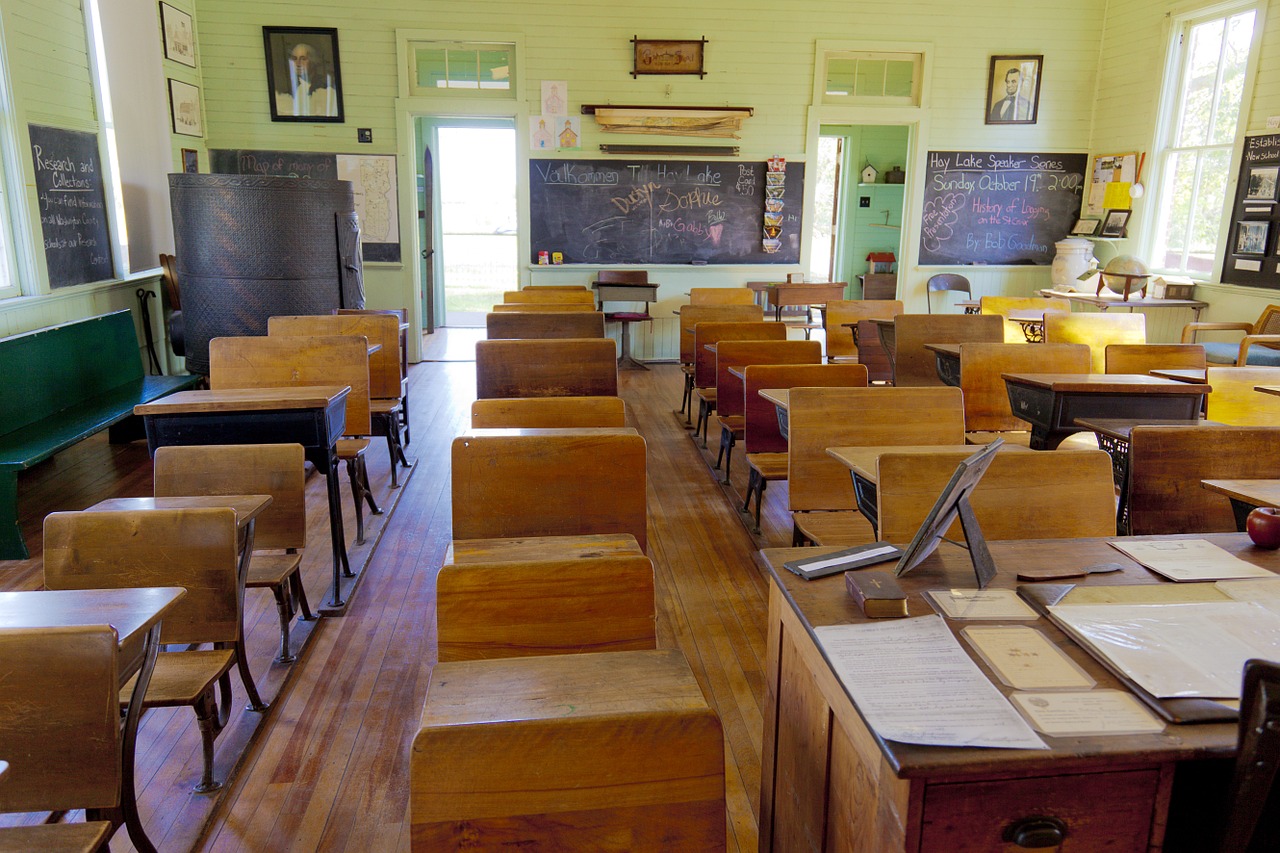
classroom-510228_1280Throughout my school and college life, I was plagued with a problem. Students all over the world will empathize with me. How does one sit through thousands of hours of classes where the teacher is boring you with incomprehensible jargon that has absolutely no relevance to your future life?

Me and my friends became LLBs (Lords of the Last Benches) at the age of ten. We tried to devise ways to kill time at the back, while the teacher was killing everyone else’s interest in the front. At first we simpletons sat straight and tried to sleep thinking we wouldn’t be noticed. But a teacher is not that dumb. Then we realized that camouflage is a much greater weapon than distance. Plan 2 was to cover a story book with a dull text and get lost in an altogether different world. The chances of getting caught are 50-50. However, these odds may vary, depending on the expertise of the student and teacher respectively. One of my friends would lift his head and look at the teacher with great concentration at the end of every paragraph he read. However, I would get totally drowned in the plot. “Rajguru! Are you listening?” would go a voice which I never would hear and face the consequences.

After that me and my friends put into motion Plan Philosopher. I would lean my chin on my hand covering my mouth, take the support of the desk and look very thoughtfully towards the teacher. My fellow philosopher would do the same and we would keep whispering and have long classroom chats. Everything went well till my bench mate developed a sense of humour. I managed to control myself at the first couple of jokes… and then he dropped a downright beauty. My laughter traveled to the end of the class.

Our biology teacher was already in his worst of moods and was teaching fungi. “Fun-geee” was the way he pronounced fungi. “Fun-geee, you bhangi! Please come here.” I knew I was in trouble. “You dare laugh at me?” he thundered and I got my first taste of Teacher Brutality. First I was yelled at in front of the whole class and then caught by my belt. Then came blows for 30 seconds, a moral lecture for a minute, blows for… This alternate process continued for what seemed like an eternity. A dazed me was forced to drop Plan Philosopher like a hot duster.

After a brief lull, I started planning strategies again. Actually it was all the holes in the desk that set me thinking. I brought a number of buttons in the class and invented Button Holing. A simple game, in which you had to thumb buttons into the holes of desks. My bench mate was skeptical at first, but decided to give it a try. We always made our moves when the teacher’s back was turned. We became quite successful and the game became a passion.

But poor me again. I always get carried away. In one particular nail-biting game, I thumbed the winning shot. The moment overwhelmed me and I jumped and yelled in triumph. This was too much even for our non-violent history teacher. I had never seen him hit anyone in the seven years I spent in that school, but I was to become an exception. I can still remember the slap of a six-foot-plus broad-shouldered giant.

I finished school a defeated boy.

Nowadays everyone seems to be coming out with a book on everything you can think of. I wish someone authored a book, 101 Things to do in a Boring Class. That definitely would have been a help.

© Sunil Rajguru
Man Machine

The daily routine. The daily rut.
We all do the same things
again and again
and again
Each day is a carbon copy of the previous day.
The same mornings
the same work
the same evenings and the same nights
We live in a world of action replays
Life is a Xerox machine
photocopying a single page
endlessly
Each copy stands
for each day
we represent
the machines we create

© Sunil Rajguru