On a razor’s edge

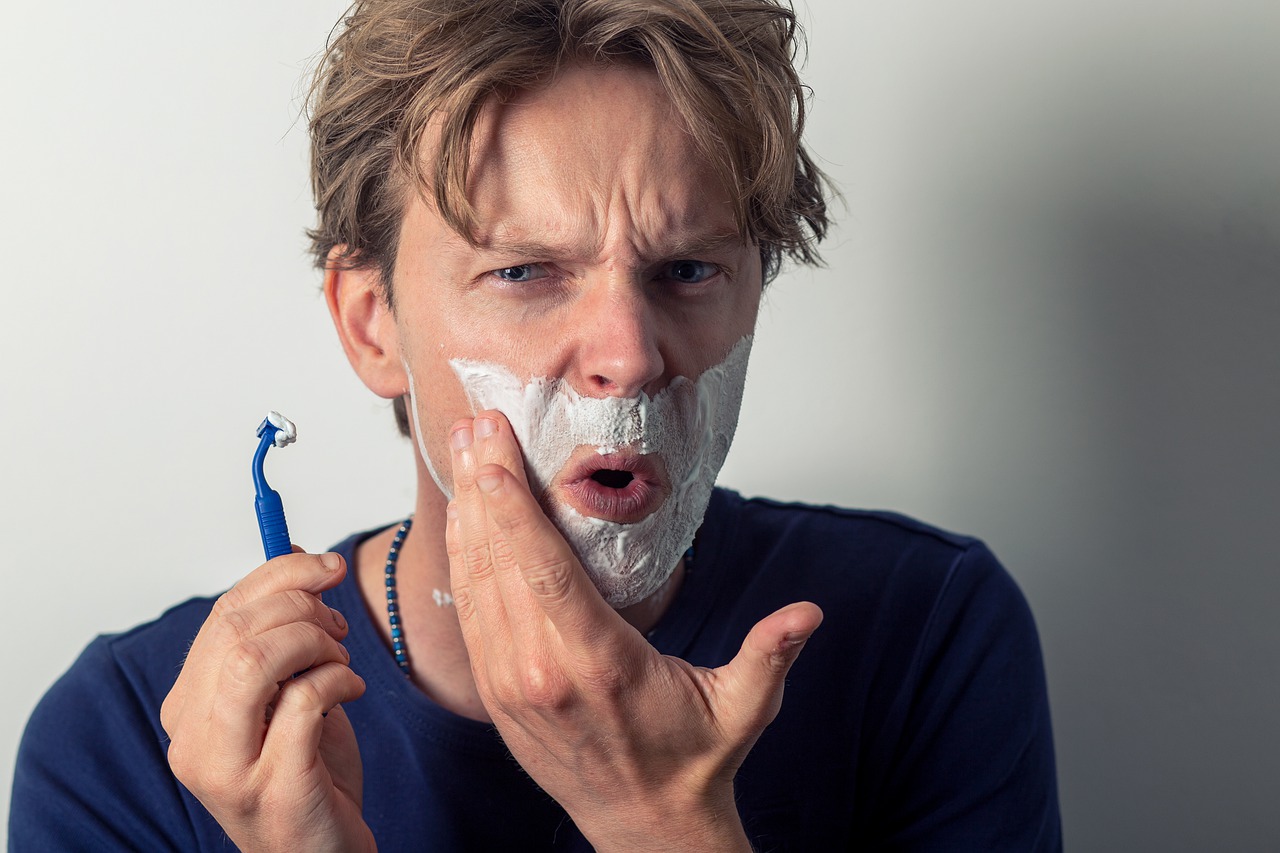
shaving-6256448_1280I hate shaving. Period. The very sight of a razor is enough to give me the creeps. I’d rather go to work unkempt than indulge myself in this daily ritual.

But it wasn’t always like that. When I was small, all things connected to shaving including ads on TV had a great fascination for me. I just loved watching my father put thick white creamy lather on his face and see the razor remove all the hair along with the foam like magic. I used to frown whenever I saw any uncle or bhaiya with a stubble.

So there I was looking in the mirror everyday and rubbing my cheeks hoping to see that elusive sprout of hair. One of my schoolmates, as eager as I was, used to shave his face with a dry razor even though he was as barren as the Thar desert.

Then one day, I finally saw it coming! I monitored my chin carefully every morning and patiently watched its progress like a farmer watching his first crops sprout. I soon got a good stubble and it was D-Day.

Armed with all the implements, I started. Phase I. Cool. Working up a lather and applying it on my face. Phase II. A disaster! I took the razor and removed the cream, I got a cut. Then another cut, then another… I washed my face and looked in the mirror horrified. All I could see was patches of blood alternating with patches of hair.

After a few more rounds of shaving I was still left with an unsmooth chin. “Don’t worry,” I was assured, “it happens to everyone the first time. You’ll soon get the hang of it.”

So I waited. In vain. Days passed. The days became months and the months years.

Everyone gave me suggestions. “Rinse your blade after every touch.” “Use warm water.” “Use the right angle.” Nothing changed it, I still looked like an injured warrior with a rough chin after shaving.

“I finally decided to get away from it all and grow a beard. And that’s when everyone started picking on me. My relative, a spinster, looked at me with disgust and said, “I simply can’t stand men who don’t shave.” One girl started calling me Devdas, while another remarked, “You look quite primitive,” relegating me to the status of a Stone Age man. A friend put his arm around my shoulder and exclaimed, “My, don’t you look depressed!”

This sentiment was echoed by others and I failed to understand the negative response my beard was getting. Even the college dean singled me out of all the people who didn’t shave. Bang in the middle of a lecture he gave me one of his cold icy stares and froze the class for 10 seconds before saying, “But why have you stopped shaving?”

The last straw came when one of my best friends refused to go out for a film with me and my beard because I looked to mean and resembled a beggar! I had had enough and decided to shave my grown beard. In my first try, it remained intact. With more than a dozen tries, it finally came off with a record number of cuts.

My friend engrossed in his paper looked up at my blood-stained face and said, “Now you look much better.” I was back to square one.

In a science fiction novel I read, the hero, thanks to a futuristic device, shaved just once a month. I wait daily for someone to come out with such an invention.

(This article appeared as an Edit Page Middle in The Indian Express in 1995)
Shape of things to come

How would we pay our respects to all our Presidents, PMs and other national leaders after 250 years of Independence?

After decades of Independence, India is struggling to pay homage to its freedom fighters, netas, former Presidents and Prime Ministers. Their names are relentlessly repeated on Doordarshan, in lectures, posters, ceremonies, awards and memorials.

I imagined what it would be like after 250 years of Independence. By then we would have had around 50 Presidents, an equal number of PMs and an unaccountable number of national and regional leaders. How would we “remember” and pay our respects to all of them?

First of all Doordarshan (if it doesn’t come under the extinct species list by then) would have come out with special news bulletins called “anniversary specials” – just to announce the birth and death anniversaries of great leaders and to show the long queue of VVIPs paying homage to them at their memorials.

With the number of serials, films and documentaries on the lives of leaders increasing in geometrical proportions, by then a special 24 hour “homage channel” would have started. Soap operas, chat shows, quizzes and telefilms on Indian legends galore. This would be the world’s first and only channel on biographies.

The big screen can’t be left far behind. Hence parallel awards for movies dealing with the life and times of netas. The name of the award? Patriot Award.

The response would be overwhelming with everyone wanting to prove his or her loyalty. The highest award of the Patriot film show, the Richard Attenborough Award, would start with Gandhi.

What about other awards? Today we have the Jawaharlal Nehru Award for International Understanding, the Indira Gandhi Award for Peace, the Rajiv Sadbhavna Award… By then there would be an award named after every hero who walked the Indian soil. The list of never-ending awards would be an encouragement for the ever-growing population.

We now have the international year of something. Then it would be “the national year of someone.” Every year, then, would be a jubilee, centenary or bi-centenary of either the birth or death anniversary of one of our leaders.

With years being booked, days wouldn’t be left far behind. We have Martyrs’ Day after the Mahatma, Children’s Day after Nehru, Teachers’ Day after Radhakrishnan and so on. The year 2200 would have all 365 days named.

The rage would then be for renaming towns and streets. How about living on Rajiv Avenue of Indiranagar in Nehru City with a Gandhi airport in the vicinity? It would kill many birds with one stone.

Stamp and coin makers would refuse to be outdone and pursue designing creations for all leaders with great enthusiasm. India would end up a philatelist’s Mecca and a numismatist’s delight.

We have plenty of national and restricted holidays with new ones being added, mostly in the form of Jayantis. (It all started with Gandhi Jayanti) The diary of 2200 would mention a “list of working days” instead of holidays. With the right number of bandhs, there could be holiday years. Not much change in the nation’s progress, as hardly anyone works in the first place.

Raj Ghat is dedicated to the Mahatma. Shanti Van to Nehru. Vijay Ghat to Shastri. Shakti Sthal to Indira… By then a new city would be built to facilitate all the memorials. The twin city of New Delhi would be Samadhinagar. It would be a huge city if the relatives and descendants of the honoured lived there. With the passage of time, statehood would also be granted to Samadhinagar.

The Special Protection Group was formed to protect the PM. Then its cover was extended conditionally to former PMs and their families. By then it would end up unconditionally protecting the families of all former Presidents and PMs. Thus India would have a parallel SPG Army.

What else?

For students in all exams a paper,
on Gandhi, Nehru or Savarkar,
Debates, ceremonies and competitions,
on heroes of all revolutions,
Election posters with photos of all
in the size of a wall.
For every leader institutions
on their lives, experts and exhibitions,
In every town at every corner,
a statue of a freedom fighter.
All this and much much more,
the Indian future has in store…

(This article appeared in the November 1994 issue of Alive magazine)

Movies and MiGs

airplane-659687_1280We returned to Jodhpur after a gap of seven years to find that a lot had changed. The population had crossed two million; sleek shops, showrooms and star hotels were mushrooming.

Change is inevitable and we took all this in our stride, but we were really disappointed to find that the wonderful open-air cinema had shut down and was gathering dust. It was something we all had eagerly looked forward to. But the projector no longer lit the screen. There were no movies, no crowds, no steamy samosas. Instead, a cold and deserted structure stared at us and the samosa hut was full of cobwebs.

I still remember sitting in the roofless, wall-less cinema which had moodas (straw chairs) on its circular cement steps as a substitute to the normal theatre seats. For us, it was a joy just being there in the open watching the big screen. If you by chance got bored with the movie, there was always mother nature to turn to. Movies used to start in the evening and one could enjoy the cool breeze, watch trees swaying in the background or observe clouds traveling across the sky. Those in the uppermost row were at liberty to turn back and watch proceedings elsewhere and we actually went to the open-air cinema for a sort of double entertainment.

The best movies used to be brought to town in those days , catering to all tastes. English specials and Hindi masala, classics and new releases. All this with a daily change. Anarkali to Kaaliya, Roman Holiday to Cabaret. You name it, the cinema screened it all. At less than two rupees, tickets were a steal.

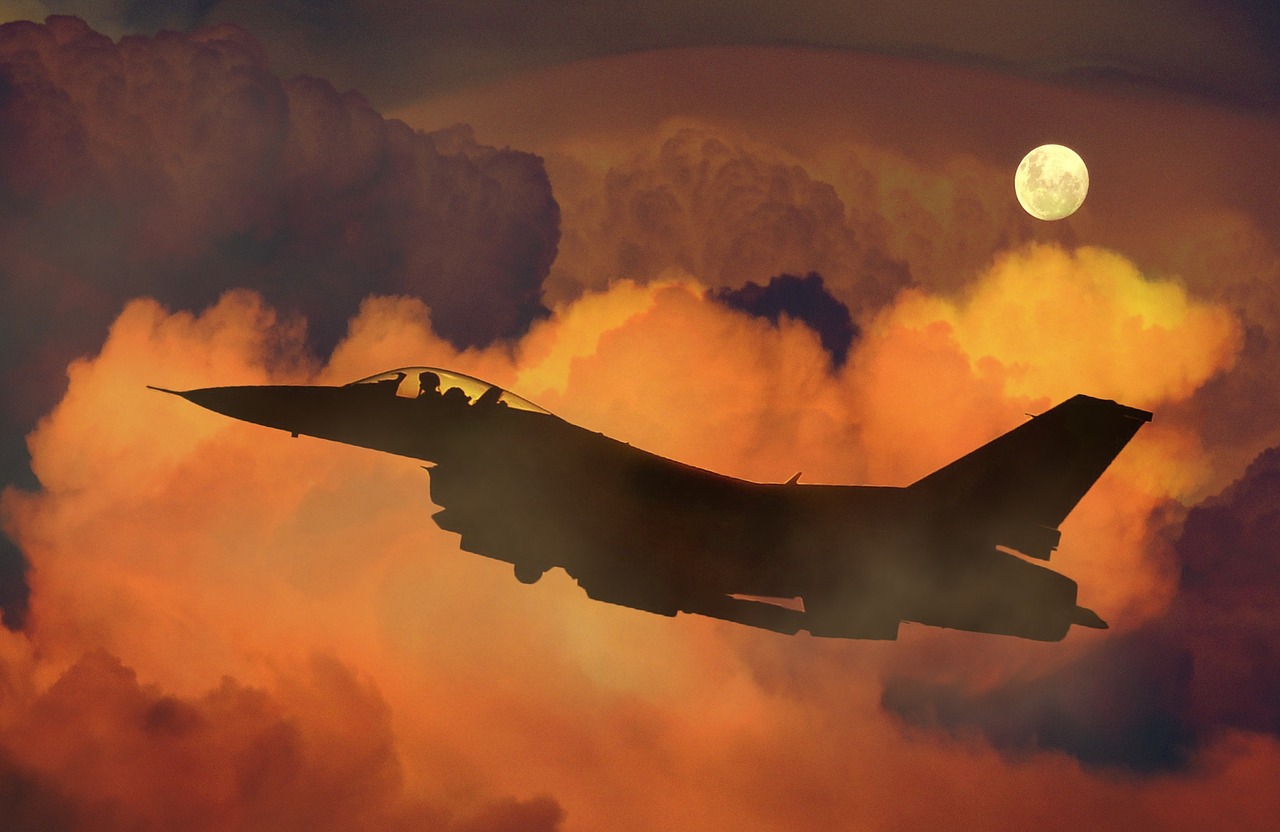
Of course, there were certain disadvantages. When jets from the Jodhpur air force station flew by all the celluloid melody was drowned in noise. So night flying would see Amitabh’s choicest dialogue drowned in a deafening roar of the passing MiGs. Or there was the occasional distraction of the odd, quiet chopper slowly passing by.

When the rains came, a few who had come prepared would put on their raincoats or umbrellas and sit smugly watching the rest of the movie. Of the remaining, half would flee the place and the other half would pick up moodas and continue watching as if nothing had happened. The movie would continue amidst the chaos, with people running here and there, with the pelting rain blurring the screen and thunder roaring in tandem with the sound track.

There is talk of a revival, but I doubt if it would be taken now with the same enthusiasm as it used to be in the past. Also doubtful is the length of the cinema’s second innings.

(This article was published as an Edit Page Middle in The Indian Express newspaper on May 3, 1994)

Filling the idle minute

class-1986501_1280Have you ever felt that school life is nothing but studies, studies and more studies? Or that holidays are long, empty and boring? That you have plenty of time to kill? Well, watching movies or MTV is not the only alternative. A hundred and one things can be done and they can be both productive and interesting. Here are a few:

Writing: “Writing maketh an exact man.” (Francis Bacon) This can include many things like poetry. You can start writing poems. It is easy if you try. Just take any topic you feel strongly about.

Writing to periodicals: There are lots of children’s columns today to which you can send writings — articles, ideas and views. This may be just for the thrill of it, seeing your name in print. Or you may be paid for it. For this, search the library for all available opportunities; study the columns to find out what type of items are accepted. Then, write out your contribution neatly, better type it, or get it typed and send it to the magazine or paper. Enclose a self-addressed stamped envelope with your item.

Writing to famous people: Why not try it? A child’s innocent views in its own handwriting does have an effect. One small boy had been writing to NASA (a space agency in America) regularly for years. They finally invited him over at their expense. Another girl from Guntur had written a letter to Mikhail Gorbachev, then head of the USSR. The Russian Ambassador in India hand-delivered the reply. Presidents and statesmen are known to have been moved by the voice of a child. Someone I know got replies from numerous sources, right from Ronald Reagan to the BBC. Once you start getting replies, you can maintain a separate file.

Start a school newspaper: This is not as difficult as it sounds. All you need is a group of willing people, with at least one person having a good command over the language and a little help from the authorities. Also preferred is someone good at sketching. First decide whether it is going to be a two or four-pager paper, weekly or monthly. Then think of a well-designed title and logo. You can take initial help from teachers and parents. Remember, the stress should be on school news.

Now you can type out the whole newspaper and photocopy the number of copies you require. Nothing like it if you can get your school authorities to cyclostyle it. Selling is the most difficult part and will depend on your skill. You can get an advertisement put up on the notice board.

If you have relatives throughout the country, you can start a family newspaper. Mention births, nursery/school/college admissions, engagements and marriages, illnesses and recoveries, jobs, promotions, windfalls, retirements. Send the newspaper by post. For this, you will have to keep well in touch with all. The whole family will thus get an update.

For your information, the international Little Master News is a four-page weekly whose editor is just 15. The 200-strong staff’s average age is 11, the youngest being a six-year-old. Gathering news, writing, editing, proof-reading, photography, graphics and advertising are all done by children. And the worldwide circulation? A whopping seven lakhs! No reason why you shouldn’t aim for an initial readership of a hundred plus.

ECA participation: This is good for all-round personality development. Many inter-class and inter-school activities take place through the year. Make the most of them. You won’t get such chances later in life. And don’t be disappointed if you don’t win prozes; you’ll always gain something from each activity.

Maintain a scrap-book: A scrap-book is a blank notebook where you paste cuttings. The cuttings might be from newspapers, magazines or books and bits of information, pictures, cartoons or anything else. Everyone has an interest in something, be it sports, politics, music or science. So maintain a scrap-book on a topic based on your field of ineterst.

Form a club: Another good way of passing time is to form a club. First, get together a group of like-minded people. Then think of a name, aim and a place to meet. Then hunt the neighbourhood for things to do, or think of something else. Even if you don’t find anything, it will be a good get-together every now and then. You can arrange outings and explore the world around you.

Or, if you don’t want to form your own club, you can join existing local ones or something like ‘Interact’, open to school students.

Utilise your backyard: If you live on the ground floor and have a big backyard, then it can be your best playground. With old tyres, boxes, planks, old metal frames and other structures, you can form obstacle courses or imaginary adventure situations. With old bedsheets, poles and bricks you can make tents and play with your friends. If you have a big tree, then you can get your father to make a strong sturdy tree house with a rope ladder to have hours of fun at the top. If you have the patience, you can take to gardening.

Make pen friends: Pen friends can either be from a foreign country or within India. There are many magazines which keep a column for pen friends. Pen friends are fun and you can exchange a lot of ideas by post.

Learn a new language: You can try learning a new language: foreign or India. Learn as many languages as you can and when you travel in this vast country, you can speak to most of them in their mother tongue.

Pursue a creative hobby: It is important to cultivate a good hobby in your spare time. You need something as a creative outlet. The most popular in the hobby is philately (stamp-collecting). No. 2 is coin-collecting. No. 3 is picture postcard collecting. So collecting anything is a hobby. One such popular hobby in India is matchbox-collecting. Other hobbies can include drawing, painting, music and bird-watching.

It all depends on your interest. Whatever it is, do something. You’ll never get so much spare time in your life.

(This article appeared in the Young World section in The Hindu newspaper on February 26, 1994)

Cricketers then and now…

Then: Used to count the runs they amassed
Now: Count the money they mint

Then: Spent hours daily in practice sessions
Now: Are fussy about their style of clothing, armbands, headbands and blackness of sunglasses

Then: Came in a clean white attire wearing their Test cap with pride
Now: Come unshaven in dirty T-shirts, wearing any old hat

Then: Were on the run in every Test and series
Now: Complacent for the series with one good innings and for the year with one good series

Then: Visiting teams occasionally blamed umpires for their defeat
Now: Umpires now are always blamed

Then: Loved to sport their country’s colours
Now: Would rather wear the sponsor’s logo

Then: Used to blame their bad form on things like lack of concentration
Now: Now blame it on things like smog and prawns

Then: At times victims of the establishment
Now: Invariably, victims of themselves

Then: Fast bowlers used to rely on the ball’s speed and swing
Now: A distorted seam and disfigured ball now relied upon

Then: Spin bowlers used to rely on their ability to spin
Now: Only a dead pitch is now relied upon

Then: Test matches were played to be won
Now: Today they are played to be drawn

Then: Symbolised the Raj
Now: Symbolises nothing

(This piece appeared in the Letters to the Editor section of Sportsworld magazine on November 3, 1993)

It’s tough being a student today…

The kids are getting smarter BUT the admissions becoming tougher

Percentages are increasing AND so are the cut-lines

Study hours are increasing AT the cost of the playing time

School bags are getting heavier AS the students are tiring

The syllabus is becoming more vast AND becoming less relevant

More knowledge is being crammed AS less is being understood

The kids are talking more OF nonsense

More laws are being by-hearted BUT less being followed

Kids are getting more exposure TO the bad things in life

Children are growing up fast AND losing all their innocence

The population is increasing in Geometric Progression (GP) WHILE the jobs are rising in Arithmetic Progression (AP)

Admission ages are getting lower AS the age of getting jobs is going higher

The literacy rate is going up BUT the standard of education is going down

More degree-holders are being churned out of colleges AT what cost?

Courses are increasing AND so is the confusion

Authorities are getting tougher BUT discipline is slackening

Mental capacity is increasing AT the cost of the physical

Tensions are mounting AND parents getting angrier

Students’ voices are strengthening BUT teachers’ voices are weakening

Students are able to solve complicated problems BUT unable to do the simple ones

More institutions are opening AND more corrupting

(This appeared in a student’s publication called Cheel in Jodhpur in August 1993)