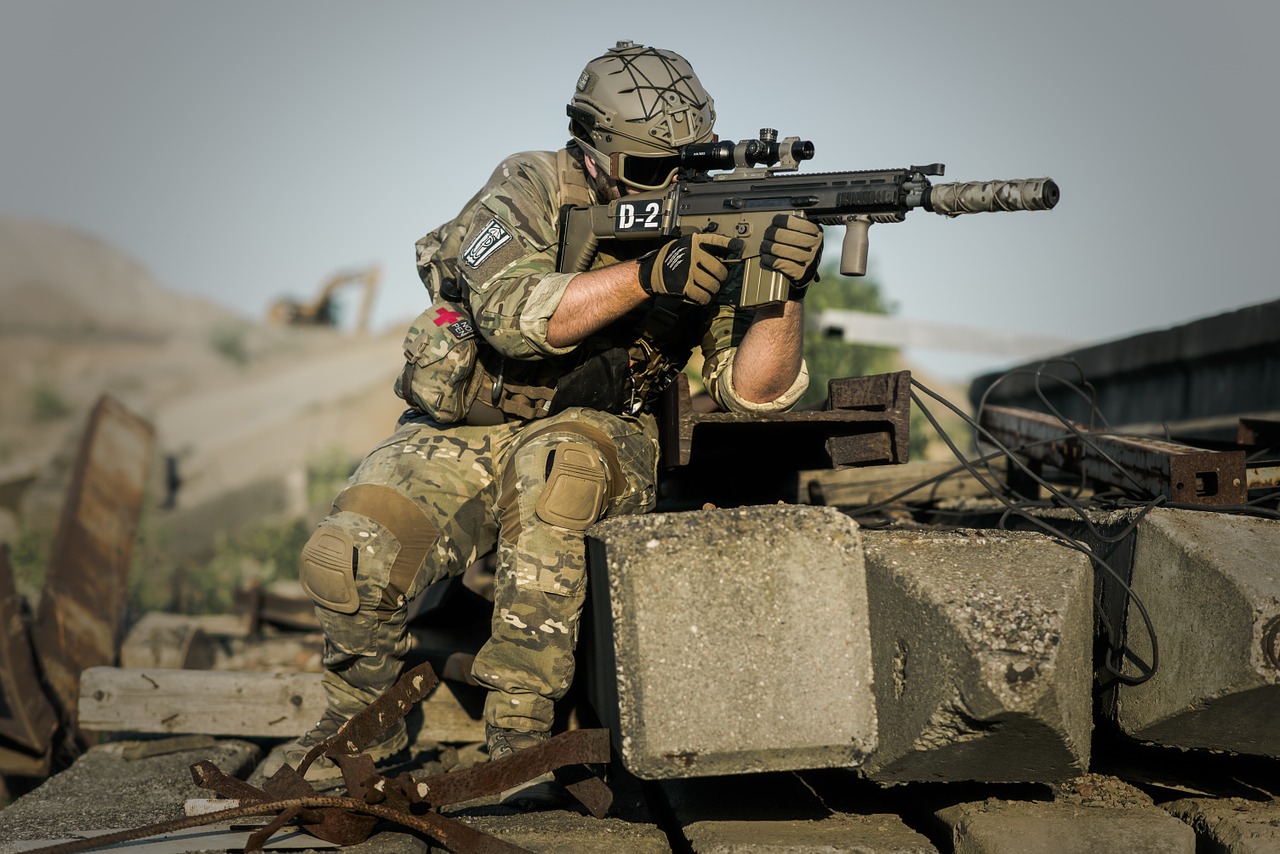
War: The great technology accelerator

war-1447023_1280Quite a lot of gadgets we use today are all thanks to the R&D that took place in wars, both hot and cold

The armed forces have optimized a whole array of technologies that have led to more and more products coming into our daily lives at a fast pace. And even if there isn’t a war going on, war research is an ongoing process and continues to give technology an edge.

Beating the Nazis–CDMA

During WW2, when the British forces sent communication over a certain frequency, the Germans monitored and jammed that frequency. So the Allies turned to CDMA (Code Division Multiple Access) which can transmit simultaneously over a wide range of frequencies, making it virtually impossible for the Germans to do anything. Qualcomm made the chips and hence had the patent for the technology for decades before CDMA handsets came out in 1995.

Powering cruise missiles–GPS

The US military uses GPS to guide smart bombs and cruise missiles, enhance ‘locational awareness’ and improve their command of forces. And for that they spend around $400 million a year. An interesting offshoot is that the military allows others to use it for free and hence we have a host of GPS devices, location based tracking and the like. 1978 saw the launch of the first GPS satellite and today, we have dozens with ageing ones being replaced all the time. This was also as a result of extensive research and steps taken during the cold war with erstwhile Russia.

Helping you become a couch potato–Remote control

While the patent for a remote control was lying in the US patent office from 1893 and invented in 1932, it was only during World War 2 that a remote control was extensively used to set off the Wasserfall missile. Then in the fifties, the first wired TV remote control was made called (what else!) Lazy Bones. The wireless remote came soon after that and brought about a big cultural change, breeding a whole generation of couch potatoes with it.

Attack of the Luftwaffe–Jet planes

Before World War 2, planes were powered by a petrol tank and a propeller. Now there’s only so much you can do with such a plane. The speed and capacity reaches a dead-end after a point of time. The Germans changed the rules of the game by replacing those old engines altogether with jet engines. The West was already looking into the science of jet planes. So, after World War 2, jet technology went ahead full steam and that laid the foundation for the modern passenger plane.

A great leap forward in computing–ENIAC

Short for Electronic Numerical Integrator and Calculator, ENIAC was the first device that could solve wide-ranging computing problems and could be reprogrammed. It was used during WW2 and cost about half-a-million dollars. This monster weighed 27 tonnes and comprised 5 million hand-soldered joints, 70,000 resistors, 10,000 capacitors and 17,468 vacuum tubes, all in a huge room. Today the complete power of ENIAC can be put in single chip that you can place on your little finger!

The Germans got this right–Satellite TV

During World War 2, the Germans were working on V-2 rocket (V stands for Vergeltungswaffe or Vengeance). It is thanks to this research that rockets were developed that could launch satellites and put man on the moon. After the war, science fiction writer Arthur C Clarke stated that ‘higher a TV tower, more the transmission range and clarity’, hence a satellite should be used to relay TV signals. This dream was realized in 1962, when the first TV signal was relayed through satellite.

Protection for fighter pilots–Ray Ban sunglasses

When the United States Air Force approached Bausch & Lomb in the thirties for sunglasses for their pilots for UV protection at high altitudes, the legendary Aviator sunglasses were born in 1936. It made the American pilots so cool that the Ray Ban brand was formed and the Aviator was sold to the public in 1937. It was reported that after Tom Cruise used the Aviator in Top Gun, sales increased by 40 percent that year. But for the record, the Wayfarer, released in 1953, is Ray Ban’s bestseller till date.

(This article appeared in the February 2006 edition of Living Digital magazine)
Sat phones anytime, anywhere connect

A satellite phone is a boon for people traveling to remote areas and also in disaster-struck areas when the regular communication lines are down

When the devastating earthquake struck Pakistan in 2005, most communication lines were broken. And that’s been the story of most national calamities, be it Hurricane Katrina in the US or India’s own Mumbai floods.

The first to be hit are the landlines and if a base station is down, then even the mobile network comes to a standstill. That’s why in the aftermath of the Pak earthquake, the Government set up 110 Thuraya satellite phone booths to ensure connectivity for everybody when disaster struck.

Sat phones are great for remote areas, reporters and frequent travelers who zig zag all across the globe.

In Jurassic Park, the hero loans his satphone to someone who is eaten by a dinosaur. The hero then finds the phone in dinosaur dung and manages to call for help from the isolated island that they are on.

But what’s a satellite phone?

While your mobile phone communicates with the nearest base station, a satellite phone or satphone does the same with the nearest satellite. So that’s why when you’re with a satphone, you don’t have to worry about a network connection or whether you’re on top of a hill or in the middle of the sea. Moreover satphones generally communicate with low earth orbit satellites (LEOs), which are faster and give better coverage. (Note, while a geosynchronus circles the globe in one day, a LEO satellite can do it in 70 minutes flat).

The only difference between a regular mobile and a satphone is that the latter is heavier and bigger. They’re somewhat like the mobiles that were available 15-20 years ago. Plus they have a large retractable antenna that you have to pull out to establish contact with the satellite.

The advantages are many

Satphones have come as a big boon for reporters, explorers, archaeologists and the like. Basically anyone who has to work in remote areas. In the famous TV serial Relic Hunter, the main character is always connected no matter which remote location in the world she goes to.

That’s been the story in real life too. Two explorers Steve Brooks and Quentin Smith were stranded in a lifeboat in the ice-cold waters of the Antarctic. Steve called his wife via a satphone (she was in London, more than 12,000 km away). A search operation was organized and they were rescued in 9 hours.

A satphone can work anywhere in the world, the only condition is that you need the open sky to establish contact.

Of course, satphones have also got a bad name, because, if you’ve got the money, then you can buy a handset and service in one country and use it indefinitely anywhere in the world. That is why it is popular among drug lords and terrorists.

They are difficult to trace and even more difficult to tap by the authorities. In fact in India too, in many a police raids, hauls have recovered satphones.

Thuraya to start in India

Out of all the satellite phone providers, Thuraya has entered the Indian market. Headquartered in the UAE, it gives commercial services to 110 countries in Asia, Europe and Africa. It recently had a tie-up with U&I System Design to provide satphones in India. However, right now the government has not authorized it for commercial use. Only officials from the Indian government and the military are enjoying the benefits of anytime anywhere connectivity.

However it is expected that Thuraya will open shop in India very soon and distribute handsets and SIM cards the way it is doing in other countries. Thuraya already has tie-ups with around 188 GSM networks all over the world.

The best part about Thuraya is that their handsets come with a dual-mode feature. That is, they are compatible with both satellite phone and GSM networks. Thuraya has around 250,000 users all over the world.

The global players

Thuraya: Uses a geostationary satellite to give coverage to Europe, Africa and Asia. Have dual mode handsets that can work on a GSM and satellite network.
Globalstar: A low earth orbit network based in the US.
Iridium: A US-based competitor of Globalstar.
Inmarsat: Powered US reporters’ videophones in the US invasion of Iraq.
Teledesic: Was a proposed system of 288 satellites between Motorola, Microsoft, Boeing, Nextel and others, which never took off.

(This article appeared in the January 2006 edition of Living Digital magazine)

Does Kodak have a future?

DSC_0103

Once the monarch of photography, today Kodak is struggling to re-invent itself in the digital age

Today when you look at a photo graph you still think of Kodak. That’s the legacy of George Eastman, who invented the roll film and founded Eastman Kodak in 1881. Seven years after that, the new company changed the rules of the game and came out with the Kodak n°1. This was the world’s first easy-to-use camera and photography went to the masses. And throughout the twentieth century, Kodak never looked back.

Today Kodak is into computer printers, photo stations, processing services, medical imaging and radiology Picture Archival Computer Systems (PACS). However, near the turn of the century, when digital imaging beckoned, Kodak started making losses, its share price started falling and so did its brand valuation. The stem still hasn’t declined even though Kodak has made great strides in digital cameras.

The reason for that is two-fold. For one, Kodak jumped on to the digital bandwagon too late. Secondly, the future may not see standalone digicams, but convergence devices of which the camera is just a part. That’s where players like Nokia and Sony Ericsson have a huge edge.

If you’re late…

In 1997, George Fisher after his success at Motorola was called in to fix Kodak as its chairman. While the future appeared to be digital and many expected Kodak to lead the way, the giant adopted an ostrich-like approach. Comfortable with the huge margins that were still coming in from the 35mm market and not very excited about low margins in digital at the time, Kodak decided to consolidate on plastic. Sure, they announced a $500 million digital R&D budget, but they refused to make digital imaging their core business.

As the years went by and other players started reinventing themselves for the impending digital revolution, Kodak failed to see the writing on the wall. It wasn’t until sales of digital cameras started overtaking that of the 35 mm ones that Kodak decided to shift gears.

In 2004, Kodak announced that it would stop making 35 mm cameras for the developed world. After that it unleashed a slew of digital initiatives. But was it too late? (Further, analysts feel this may have had more to do with the fact that share prices were consistently falling for four years in a row, rather than a love for the digital)

Can Kodak deliver?

Kodak is on a high after annual sales show that it has grown to third place for digicams in 2004-05. Ahead are only Sony and Canon while behind are HP, Olympus, Fujifilm and Nikon, while Agfa filed for bankruptcy.

More heartening is the fact that in the latest quarter, Kodak takes first place.

Good news? Not so think investors. Top rating company S&P, which had already been telling investors to stay away from Kodak, stuck to a gloomy forecast despite the “first place” news. Why? Well for one, Kodak is still the largest supplier of camera films in the world. And these sales are in a state of decline and may one day become next to nothing. Secondly, the hottest segment today in the camera market is mobile cameras or mobicams and that is where Kodak doesn’t have a presence.

The future camera in all probability will be part of a convergence device. Nokia has taken a big push into what it calls “multimedia” devices and the alliance between Sony and Ericsson will ensure that it remains in business no matter what direction the market takes.

Another factor is the form factor. If you think of stylish and good-looking digicams in the market, then you think of Sony and Canon. While the technology behind Kodak digicams is sound, it still has a long way to go in the looks department.

Sure, it has come out with the popular EasyShare digicam range and the Ofoto option for the online user. There’s also Printer Dock Plus, that lets you print straight from the digicam. It’s also part of technology innovations like high-definition OLED that could be the preferred display for all digicams of the future.

But, big companies have survived by staying a step ahead of technology. Kodak has just about matched its steps with the digital world.

The next few years will be critical to see whether it can remain ahead of the rest.

Kodak Timeline

1881: Eastman Dry Plate Company founded
1888: Kodak n°1, first easy-to-use camera
1997: Kodak to invest $500m in digital research
2004: Digicams start outselling film cameras.
Kodak announces digital strategy and becomes number 3 digicam maker.
2005: Kodak is still the largest supplier of camera film in the world.
Mobicams become the single biggest emerging market in cameras.
Kodak is downgraded by S&P. Speculation that Kodak is ripe for a takeover.
2007: Job cuts of 25000 employees to be complete for Kodak

Elephants can dance

1964. The then IBM chief, Thomas Watson Jr. sunk a humongous $5 billion (about the turnover of IBM at that time!) and decided to junk all existing software and hardware and develop the System/360 range of mainframes. While people dismissed Watson Jr as crazy, IBM took centre stage in the IT revolution and successfully re-invented itself.1993. IBM was ailing and Lou Gerstner did the unthinkable again and decided to shift IBM’s core business to services, while consolidating in the server market. He laid the foundation of an eventual selloff of the PC division. IBM which invented the PC, sold off the PC division to Lenovo

(This article appeared in the October 2005 edition of Living Digital magazine)

WorldSpace: Not only music

This satellite radio service is also involved in disaster warning, weather alerts and in connecting up remote communities

After a longish hiatius, Worldspace is reinventing its strategy with it’s satellite based radio offerings. What is not so well known are the other community oriented services that it offers in Asia and Africa. Worldspace leverages the global reach of satellite transmission to reach its services to where terrestrial infrastructure does not exist, or where it has been destroyed or rendered inoperable.

Against the next tsunami

Regular terrestrial radio, and communications infrastructure can be knocked out during national calamities, but not so satellite radio. It doesn’t have to rely on ground stations for transmission and does so via an overhead satellite. It can be deployed during national calamities, give key traffic information to commuters and weather-related information round-the-clock.

And that is one of the things that Worldspace has focused on after the last tsunami took place.

Says Managing Director Deepak Verma, “Post the tsunami, we have been working very closely with departments like the Department of Science & Technology, the Department of Disaster Management- State of Tamil Nadu and the UNDP (United Nations Development Program) to set up a national disaster warning and management network.”

Traffic and weather alerts, 24/7

Worldspace is already giving weather information services for the India Meteorological Department (IMD). In the US, satellite radio is popular for traffic reports and weather alerts. XM and Sirius radio together have dozens of dedicated channels for this. XM also gives weather data to pilots and weather spotters. XM NavTraffic integrates with a car’s GPS system so a driver can also know the traffic flow on his map. Right now this is only available on the Acura RL, other carmakers are on to it. Of course these services became popular only after XM and Sirius convinced people to use in-car receivers. Currently WorldSpace does not have car radio sets in India.

Connecting communities

First Voice International, a division of Worldspace, works with governments, communities and NGOs to deliver key information on “pressing issues” in the poorest of regions. Says President Kirk Talbott on the official website, “First Voice can deliver to people who are living and working even in the most isolated areas of Africa and Asia the information that can improve and, in many cases, save lives.” The Asia Development channel addresses social issues in Bangladesh and the African Learning Channel spreads education and awareness in the continent.

Red Cross Radio!

No, the International Red Cross hasn’t suddenly got into the radio service, but this is an after-effect of Katrina, the hurricane that devastated New Orleans in America.

XM Satellite Radio distributed 200 receivers to Red Cross workers. That helped relief workers get instant information related to relief work, shelter locations and assistance programs. These radios were also hooked up with public address system and put in information rooms that survivors could access. XM, incidentally, had an emergency alert channel even before the Red Cross channel was launched. So while the Bush administration was slow to react to the aftermath of the devastating killer storm, XM could put their channel in place because they did not have to rely on any infrastructure on the ground. Moreover when cities and towns and ravaged by disasters, information flow to and from the disaster area is very important and that is exactly what satellite radio ensures. So that’s why Worldspace and other satellite radios aren’t just about music.

(This article appeared in Living Digital magazine in October 2005)

Revolution in cyberspace

Cyberactivism is a cheap and effective way of spreading a cause

When a small town in Japan was considering whether to have a nuclear facility or not, just 75 protest emails led the mayor to decide the issue through a public referendum. That’s an example of the power of cyberactivism. More and more people are realizing the benefits of using the Internet for activism. The benefits are many. It’s cheap. It’s immediate. It’s global. And it’s a way by which a small group of people can reach out to large numbers all across the globe. Called “digital organizing”, cyberactivism uses websites and emails to drive home a cause.

How it all began

The ELZN, or more popularly the Zapatista movement, was probably one of the first practitioners of cyberactivism. In 1994, ELZN declared that it was at war with the Mexican government over its dictatorial policies. After capturing some municipalities in a city with the use of violence, the movement switched to a battle in the virtual world. A mass of emails were sent out with details of the capture and the government found no way of suppressing information regarding the uprising thereafter. The Zapatista movement quit the use of violence and used the Internet medium to spread their cause. The hostilities lasted only for a few months. After that the ELZN created the Electronic Disturbance Theater, which remained very active on the Web.

Greenpeace: Taking it to the next level

However, it was Greenpeace which took this form of activism to higher and higher levels and they have many successful campaigns under their belt. That includes one out of India too. While the Bhopal gas disaster happened in 1984, the after-effects in the form the closed Union Carbide factory decaying and contaminating the groundwater stay on even today. In 1999, Greenpeace helped set up a cybercafe right in front of the factory and thousands of Bhopal citizens came and sent protest emails to both the erring company and various governments. Previously most of them had no way of addressing their grievances. Dow Chemicals (which is Union Carbide today) decided to skirt the issue and started screening out such emails. However, the issue subsequently got great media attention and soon everyone came to know about the whole issue. Later cyberactivism campaigns were much more successful and in one of them, the World Bank decided to stop funding polluting factories in Gujarat. Greenpeace has tasted much greater success in Europe and have successfully fought many campaigns on the Web.

Post 9/11 concerns

However, cyberactivism is a form of civil disobedience and is totally frowned upon by most authorities. Especially after 9/11 when security in cyberspace came under the scanner and any form of hacking or online activism was not considered the right thing. For some, the line between cyberactivism and cyber-terrorism blurred a bit. However most cyberactivists point out that there is no violence done by this movement and most of the activities fall in the ambit of cyber laws.

While right now computer penetration, especially in places like India, is limited, the future could see cyberactivism as the preferred choice for most groups across the world.

Cyber Activities

Cyberterrorism: Terrorism spread through computer networks and the Internet.
Hactivism: Hacking for a political cause.
Crypto-anarchism: Belief that all computer and Internet users should be anonymous. Will be achieved through the use of strong public key cryptography that will give a high degree of privacy to everyone.
Internet Activism: Associated with citizen movements while cyberactivism is used with civil disobedience.

(This article appeared in Living Digital magazine in August 2005)

United we fall?

“Divided we stand, united we fall.” That seems to be the motto of the new world. We talk so much of a new world order and a united globe, but events in Europe, the erstwhile USSR and Asia are contrary to all these ideas.

Europe is turning out to be a real paradox. On one hand there is great talk of Europe’s unification and a European Council, but on the other hand the continent’s individual nations do not appear to be staying in one piece.

The biggest example of this is Yugoslavia which for months has been in the world headlines. The situation there is deteriorating day by day and today a stalemate marks the country’s future. Even the special UN Peace Keeping Force for Yugoslavia does not seem to be making much headway.

The former Yugoslavia had six federal republics and the president was selected on a rota system. What started as a row over who the next president should be ended up as one of the bloodiest battles and secessions seen in recent times. Now everyone, right from the common populace is tired of the hatred and bloodshed that is prevalent there. Even in the breakaway republic of Bosnia-Herzegovina, there is a lot of infighting between the Serbs, Croats and Muslims. A bitter battle was witnessed for the possession of its capital, Sarajevo, recently. So even if Yugoslavia breaks into all its former republics, peace will be prevalent.

Another European country that disintegrated was Czechoslovakia, though the process of division did not witness much bloodshed. Now we have the Czech and Slovak republics.

Even the United Kingdom does not seem to be so united. Ulster has been trying to break away for years with the Irish Republican Army (IRA) causing immense damage. Now even public opinion is Scotland is going strongly in favour of absolute independence. If things in Scotland get as bad as in Ulster, no one might be able to do anything about it. Hence Great Britain may not exist and England might be left all alone.

Even Helmut Kohl, the strongman of Germany (the other EEC power) does not seem to have his country under control. A united Germany has left a lot of disillusionment everywhere and most of the East Germans now wish that Germany should have stayed divided.

The biggest example of disintegration is the former USSR which is currently in total disarray. The Baltic republics — Lithuania, Latvia and Estonia — have already broken away. What is left is the Commonwealth of Independent States (CIS) which is an uneasy alliance with little in common. This could break into 12 republics anytime. The tensions between the Russian Federation and Ukraine do not help matters. Again, Chechnya in the Russian Federation has witnessed cries of independence. So no one can really tell how many pieces the former USSR will break into in the years to come.

There are also many secessionists waiting like dormant volcanoes in various countries. One does not quite know when the eruptions will take place. The Kurds in West Asia have been nurturing dreams of a separate homeland for ages, waiting for the right chance. They got one when the US attacked and devastated Iraq in the Gulf War. The Kurds then started rebelling and fighting for a separate country. It was only the brute force of Saddam Hussein that stopped them.

Turmoil in Pakistan could result in Sindh, which is shouting for independence. The fall of communism in China will result in Tibet demanding autonomy.

Then India sadly faces a problem in this aspect too. In 1947, Pakistan broke away from India. Since then Bangladesh broke away from Pakistan in 1971. India, however managed to stay in one piece. But for how long? Punjab and Kashmir are two states where there are militant uprisings in order to part ways with India. Now even international attention has been focuses on these two states.

The Punjab problem, with the cry of Khalistan, has been raging on for such a long time that people have finally got bored of it. It is a shame because so many innocent civilians are being killed endlessly day after day.

The problem has so far claimed the lives of a prime minister, a former army chief, umpteen high officials, a large number of security personnel and tens of thousands of innocent victims. On the whole, millions have been badly affected.

The Kashmir problem is different from the one in Punjab in the sense that less people are killed there. But then, the cry for independence (from India) is fast acquiring the dimensions of a mass movement.

We further have the problem of more and more groups asking for statehood, i.e., just as Punjab and Kashmir want to break away from India, these groups want to break away from their respective states. Prominent among these are cries for Jharkhand in Bihar, Bodoland in Assam and Gorkhaland in West Bengal. At present we have 25 states and if everyone has his way, we would end up with 40 states!

So, we still have a long way to go before we can seriously talk of a united world.

(This article appeared in Deccan Chronicle on September 13, 1992)