The human race, Version 2.0

With technology and product development moving at a rapid pace, it’s just a matter of time before we all become cyborgs in part or full

In the Star Wars films, Obi Wan-Kenobi destroys General Grievous, a cyborg, and later defeats Anakin Skywalker seriously maiming him, forcing him to become one of the most feared and popular cyborgs of all time: Darth Vader. While both these characters along with The Six Million Dollar Man were made cyborgs out of sheer necessity, what’s to stop a normal healthy man to become a cyborg if the technology and money permits? If we go along that path, then it could soon lead to thousands of cyborgs, who either want to be stronger or more powerful, or even to use technology itself in a more useful way.

But what’s a cyborg?

The word cyborg is a compressed form of ‘cybernetic organism.’ That means part man and part machine. This could also become part man part computer in future. The concept has been around in the science fiction writing of the early twentieth century and it entered mainstream TV and cinema much later on. While this has included artificial mechanical limbs embedded chips and devices, another interesting concept is the exocortex, which is a brain-computer interface. In theory, the exocortex would be a computer-like processing system that would co-exist with and enhance the power of the human brain. Neuromancer is a book that has talked about such a scenario. And it won’t be called hardware or software but ‘cyberware’ to mean the interface between man’s nervous system and a computer.

A cyborg in real life

Though there were many experiments before him, Steve Mann could probably be described as the first real-life cyborg. He is also the father of wearable computing, which is a staple for many futuristic science fiction stories. In 1981, Steve devised a backpack computer with seven microswitches for control. He attached a CRT camera viewfinder to a helmet. He later devised the EyeTap which is a camera cum display that can be embedded into the eye. EyeTap has lead to the term ‘computer mediated reality.’ You can view codes or read little notes even as you talk to people. A big plus here is that you could save all the images you see during your life and convert them to a CyborgLog, also called a glog.

Steve always walks around with his office lab, TV station (live images are transmitted to his website) all rolled into one. Steve was caught up in post-9/11 security and Canadian airport authorities forcibly removed his wearable devices leading to loss of tens of thousands of dollars and mental trauma. Doctors have also felt it’s better he does away with his implants to avoid brain damage. In 2001, a documentary movie called Cyberman was made. Steve has also tried putting electrodes on his skin to control his computer set-up or control its cursor with his brain waves.

There are others too…

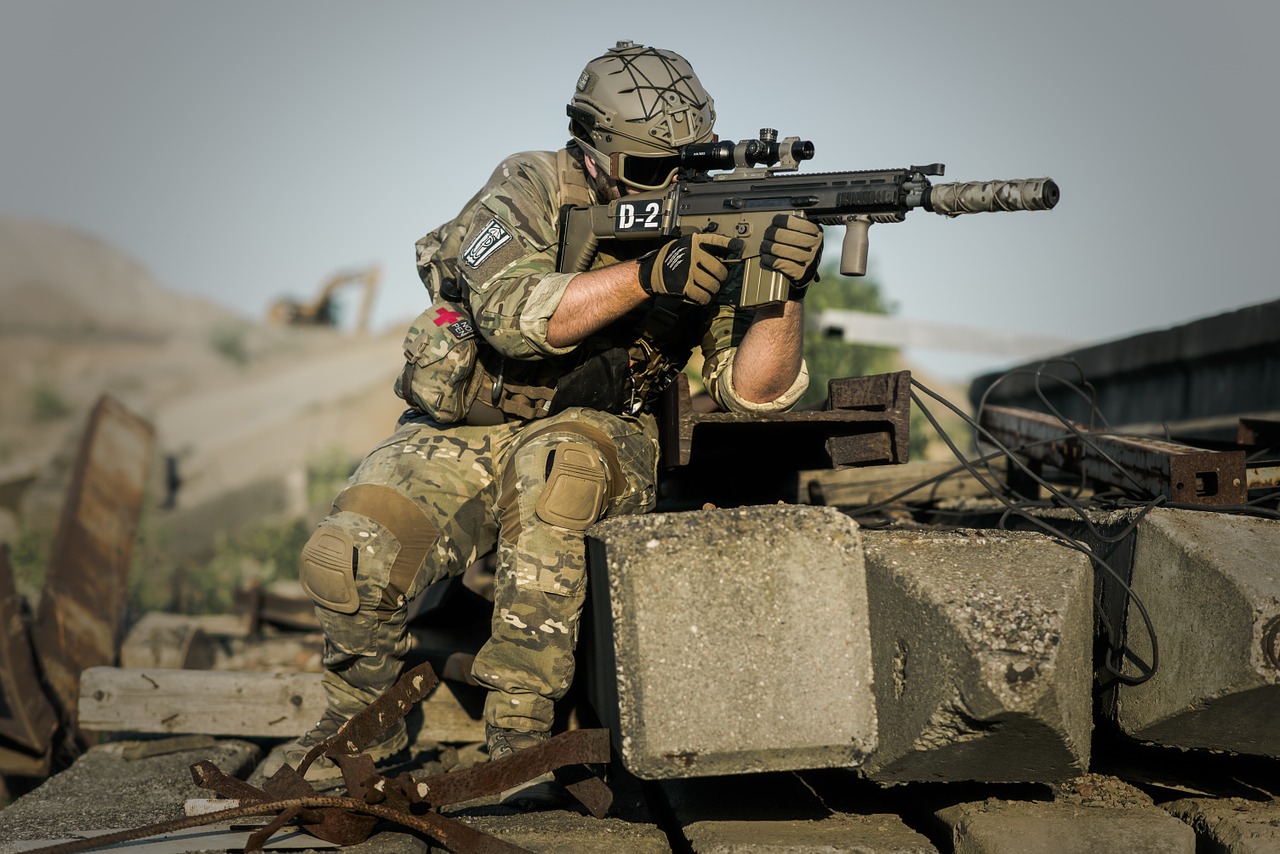
Georgia Tech’s Thad Starner has also been wearing his own customized wearable computer from 1993. Carnegie Mellon University also came out with a wearable computer called VuMan 1. The US military’s Future Force warrior consists of a high-tech integrated system that will be part of the uniform of the soldier of tomorrow.

Then how about having a chip implanted inside your body? In 1997, Eduardo Kac, an artist in Brazil , implanted a microchip in his ankle. The nine-digit identification tag was registered in an Internet database.

But someone, who took the concept of the chip implant even further, is cybernetics professor Kevin Warwick, nicknamed Captain Cyborg. A year after Kac, he implanted an RFID transmitter (not a mere tag) under his skin. He used this to control lights, doors and other computerized devices. Then he implanted 100 electrodes into his nervous system and used them to make a robotic arm mimic his own hand movements. He then put an implant into his wife’s nervous system and tried to connect the two systems through the Internet to create a form of telepathy.

Going beyond mere experimentation

Cyberkinetics is a company which could well be at the forefront of the cyborg revolution if and when it takes place. They’ve developed a BrainGate chip that can use thought to power a computer. Sounds spooky or too futuristic? It’s neither. BrainGate will benefit a handful of disabled patients, the first being Matt Nagle. The chip was implanted into his brain and its electrodes can do a one-way communication with neurons. Nagle is paralyzed neck down and can now change TV channels and move a mouse cursor with just his thoughts.

He can also move a robotic arm thanks to that.

But the world’s first fully working bionic arm went to Campbell Aird, who had his arm amputated due to cancer. He got fitted with a 1.7 kg battery-powered artificial hand made of silicone and carbon fiber. Incidentally research work is on to have an artificial component of practically every part of the human body you can think of.

Some contend that we are all cyborgs to some extent. What happens when you put a pacemaker in your heart or plug in an MP3 player for hours on end? How many people clutch their mobiles 24 hours a day? And what of the hundreds of people who have already put RFID tags on their skin? Our lives are already integrated with the technology we use; it’s just a matter of time before the technology becomes embedded within our bodies.

Cyborgs in reel-life

Darth Vader in Star Wars: Maimed and burnt beyond treatment in a light saber fight with Obi Wan-Kenobi, Anakin Skywalker is turned into a mean looking all black cyborg by the evil Emperor.

Alex Murphy, aka Robocop: A maimed shot and brain-dead police officer is converted into a robotic cop or Robocop.

Steve Austin, aka The Six Million Dollar Man: The US government spends $6 million (a lot in 1974 when the TV show came out) on critically injured Astronaut Austin to make him stronger and faster with tremendous eyesight. Austin works as a secret agent thereafter.

Jaime Sommers, aka The Bionic Woman: A spin off of The Six Million Dollar man, the heroine meets with a sky diving accident and becomes a faster and stronger cyborg with super hearing.

Inspector Gadget: Is an inspector with various gadgets built into his body.

Cyborgs in Gaming

Cyberdemons (Doom), Master Chief (Halo-The jury’s out on whether this dude is actually a cyborg or not), Trans-Human arm of the Combine (Half-Life), The Strogg (Quake) and Cyborg Molotov (Empire Earth).

(This article appeared in the March 2006 edition of Living Digital magazine)
Smaller, Cooler and Smarter

While in the past it was all about getting the chips smaller and smaller, a new set of innovationsis all set to take chips to each and every digital product you can think of

Moore ‘s Law is no longer that important when it comes to chips. Multicore is in. Cooler chips are in. While PCs in the home and workplace along with laptops have already entered our everyday lives, in future PCs at the center of the digital home and powerful computers for handhelds could well be the next big thing

Cool and Quiet

Now most of the computers of the world still make a lot of noise and need internal fans to prevent overheating. Soon we’ll have chips that’ll result in quieter computers that need less power and are cooler.

One of the ways this will be done is using dual-core and multi-core technology. Says Donald MacDonald, head of Intel’s Digital Home division, “People want to have beautiful designs in their house. They want to be cool. You don’t want to have a big fan in the middle of your romantic movie. That won’t be there as multi-cores bring down the thermal envelope. Eventually you’ll see 2,4,16… and many many more cores going forward.”

Smaller will still count

Chips have been following the ‘smaller and smaller’ path ever since the beginning of microprocessing. Though of late chipmakers have taken a diversion on the multi-core route, the chip architecture will definitely get smaller. That’s mainly due to mobile devices, which are getting more powerful. Small chips on mobiles will spell lighter and better-looking mobiles. Recently Microsoft chief Bill Gates talked of a mobile connecting to a keyboard and TV to become a personal computer. While we are years away from that, you will still require massive computing power on a small chip for all of that.

More and more bits

We have come a long way from the Intel 4004, which was a 4-bit processor. From 4 to 8 to 16 to 32. But what’s the difference? Well a 64-bit processor will be faster and more powerful than a 32-bit one. (Of course, all your computer programs should have been written accordingly to take full advantage of that.) And it’s not just about speed. While servers are reaping the benefits of 64-bit computing, on the PC, it will give a big fillip to games and video.

Other innovations

And there are other things too. IBM has made a breakthrough in ‘deep ultraviolet optical lithography’ that will work below 30 nanometers. This at a time when Intel has just started making chips in the 65-nm architecture.

Then there was an idea to build a computer on the basis of quantum mechanics in the seventies. Such computers could be, theoretically, millions of times faster than the current day computers.  Also, on the anvil are clockless CPUs. The CPUs of today have a central clock and no component in the computer can run faster than this clock rate. If you go clockless, then this limitation is removed.

All these breakthroughs will help all manners of chips get into PCs, laptops, mobiles, MP3 players and other digital devices.

Chip power to the car

Freescale Country Manager Ganesh Guruswamy explains how smart a car can get. The number of components can be brought down so drastically that if someone opens the bonnet, he might ask, “Where’s the engine!”
One application is control of your car from a remote location. A remote station can monitor your car, read the status of the car and even diagnose the car. If the cars get locked accidentally and can’t be opened, then it’s possible to send a software dump and unlock the car. A breakdown can automatically call for workmen. Right now Onstar of America has this facility.

Reverse car sensors, Smart headlights for cars, Internet surfing on the go, sideway airbags are some of the other things that can be made easier. It is also possible to re-circulate wasted oil through the exhaust.

(This article appeared in the March 2006 edition of Living Digital magazine)

War: The great technology accelerator

war-1447023_1280Quite a lot of gadgets we use today are all thanks to the R&D that took place in wars, both hot and cold

The armed forces have optimized a whole array of technologies that have led to more and more products coming into our daily lives at a fast pace. And even if there isn’t a war going on, war research is an ongoing process and continues to give technology an edge.

Beating the Nazis–CDMA

During WW2, when the British forces sent communication over a certain frequency, the Germans monitored and jammed that frequency. So the Allies turned to CDMA (Code Division Multiple Access) which can transmit simultaneously over a wide range of frequencies, making it virtually impossible for the Germans to do anything. Qualcomm made the chips and hence had the patent for the technology for decades before CDMA handsets came out in 1995.

Powering cruise missiles–GPS

The US military uses GPS to guide smart bombs and cruise missiles, enhance ‘locational awareness’ and improve their command of forces. And for that they spend around $400 million a year. An interesting offshoot is that the military allows others to use it for free and hence we have a host of GPS devices, location based tracking and the like. 1978 saw the launch of the first GPS satellite and today, we have dozens with ageing ones being replaced all the time. This was also as a result of extensive research and steps taken during the cold war with erstwhile Russia.

Helping you become a couch potato–Remote control

While the patent for a remote control was lying in the US patent office from 1893 and invented in 1932, it was only during World War 2 that a remote control was extensively used to set off the Wasserfall missile. Then in the fifties, the first wired TV remote control was made called (what else!) Lazy Bones. The wireless remote came soon after that and brought about a big cultural change, breeding a whole generation of couch potatoes with it.

Attack of the Luftwaffe–Jet planes

Before World War 2, planes were powered by a petrol tank and a propeller. Now there’s only so much you can do with such a plane. The speed and capacity reaches a dead-end after a point of time. The Germans changed the rules of the game by replacing those old engines altogether with jet engines. The West was already looking into the science of jet planes. So, after World War 2, jet technology went ahead full steam and that laid the foundation for the modern passenger plane.

A great leap forward in computing–ENIAC

Short for Electronic Numerical Integrator and Calculator, ENIAC was the first device that could solve wide-ranging computing problems and could be reprogrammed. It was used during WW2 and cost about half-a-million dollars. This monster weighed 27 tonnes and comprised 5 million hand-soldered joints, 70,000 resistors, 10,000 capacitors and 17,468 vacuum tubes, all in a huge room. Today the complete power of ENIAC can be put in single chip that you can place on your little finger!

The Germans got this right–Satellite TV

During World War 2, the Germans were working on V-2 rocket (V stands for Vergeltungswaffe or Vengeance). It is thanks to this research that rockets were developed that could launch satellites and put man on the moon. After the war, science fiction writer Arthur C Clarke stated that ‘higher a TV tower, more the transmission range and clarity’, hence a satellite should be used to relay TV signals. This dream was realized in 1962, when the first TV signal was relayed through satellite.

Protection for fighter pilots–Ray Ban sunglasses

When the United States Air Force approached Bausch & Lomb in the thirties for sunglasses for their pilots for UV protection at high altitudes, the legendary Aviator sunglasses were born in 1936. It made the American pilots so cool that the Ray Ban brand was formed and the Aviator was sold to the public in 1937. It was reported that after Tom Cruise used the Aviator in Top Gun, sales increased by 40 percent that year. But for the record, the Wayfarer, released in 1953, is Ray Ban’s bestseller till date.

(This article appeared in the February 2006 edition of Living Digital magazine)

Nanotech Gadgets smaller, faster, cheaper

Nanotechnology promises to revolutionize the next generation of gadgets-and almost everything else

A supercomputer that fits in your palm, a lethal weapon the size of your hair and a factory in your home. These are just some of the promises that nanotechnology offers, maybe in this century itself. But first what is nanotechnology? The term comes from nanometer (nm), which is one millionth of a millimeter. A strand of hair from your head would be a super giant in that region. So nanotechnology deals in the nanometer scale, which usually is 0.1 to 100 nm.

That means all the products created with this technology will be smaller, more compact, more efficient, cheaper, use less resources… the list is almost endless.

The concept of nanotechnology first came in a talk given by physicist Richard Feynman in the famous 1959 “There’s Plenty of Room at the Bottom” talk. He then talked of manipulating atoms to create a powerful form of chemistry to create “massively parallel operations”.

But much of the promise of nanotechnology is in the distant future. Let’s talk of 2005 and see what products have already come out using this new technology.

These are by no means the first generation of “nano products”, products sized in the nano scale. These are merely nanotechnology-enhanced products. We are still years (maybe decades) away from making a cellphone for an ant, as the HP ad puts it.

A screen in your goggles

The Teleglass is a tiny 0.24-inch screen that you can fit on top of your goggles. These videoglasses use AMLCD (active matrix liquid crystal display) technology. You can connect the tiny screen to your mobile, digicam or portable DVD player and watch movies and videoclips. Clip it on one lens and you can leave the other clear, so you can walk or do you work normally while watching a film.

Nano air to warm your soles

Wouldn’t it be great to have warm insulating soles in your shoes when the going gets really cold? Most insulation requires a layer of air to warm you, which gets compressed if you step on it, rendering it ineffective. ToastyFeet from Polar Wrap uses “aerogel” which are nano-sized pockets of air, which work even if you step on them. And if you can always keep your feet warm, then it greatly reduces the chances of getting a cold. http://www.toastyfeet.com/, http://www.polarwrap.com/, http://www.aerogel.com/

Gaming’s virtual reality

The CyberMan GVD510-3D is a stereoscopic head-mounted display (HMD) that gives gamers a taste of virtual reality. It’s a tiny ultra-low power 640 x 480 VGA-resolution microdisplay. There are 921,600 color dots in a 0.44-inch-screen capable of 16.7 million colors. The makers claim that once you put it on, it’s as good as a 40-inch screen placed at a distance of 7 feet. http://www.oriscape.com.cn/

Straighter flight for golf balls

Golf balls were one of the first products to use nanotechnology. NanoDynamics has introduced the next generation of golf balls with NDMX technology that ensures a straighter flight for the golf ball. This hollow metal ball reduces the “hook” and “slice” of a golf ball and optimizes energy transfer from the golf club head to the ball. http://www.nanodynamics.com/

Dirty no more

Nano-tex developed a spill-resistant fabric using nanotechnology. Arvind Mills and Arrow shirts are some of the beneficiaries of this technology. If you drop tea on a nano-tex pant, then the drops just roll off your fabric. Nano-tex has also come out with fabrics that repel and release stains, resist static and give cool comfort. http://www.nano-tex.com/

Merc gets a coat of nano

Mercedes Benz has gone in for nano-particle clearcoat paint that’s glossier and more scratch-resistant than regular paints. There is a layer of clear lacquer above the paint, which has extremely small ceramic particles that form a protective network all over. The paint came out after four years of research and is expected to have an increased life over other paints by many years.

The first nano

In the eighties, IBM manipulated Xenon atoms for the first time to spell out their logo. Each letter is 5nm long.

Nano nano nano…

Nanotechnology: Technology that deals in the nanometer scale, which usually is 0.1 to 100 nanometer. (Note one nanometer is one millionth of a millimeter)
Nanowire: A nanometer wire that will be very handy in making ultra-small circuits in ultra-small products.
Nanobotics: The science of designing and building nanorobots
Nanoknot: Nanoropes that can be tied
Nanolithography: Printing at the nano scale
Nanomotor: A molecular device that will be able to convert energy into movement

Trouble with goos

While a lot of people oppose nanotechnology citing that it could lead to the creation of incredibly small weapons easy to hide and use. Others have predicted the emergence of a “gray goo”, created by “self-replicating nanobots running amok”. How would you control millions of nano robots that can create billions of others. Then there’s “green goo” where a self-replicating nano machine would would consume all organic particles, creating a green non-living organic mass.

Carbon nanotubes, which are nothing but cylindrical carbon molecules, will form the building blocks of many nano products of the future. Right now they are being used to build newer and better screens, fuels cells for mobiles and the like.

(This article appeared in the February 2006 issue of Living Digital magazine)

Sat phones anytime, anywhere connect

A satellite phone is a boon for people traveling to remote areas and also in disaster-struck areas when the regular communication lines are down

When the devastating earthquake struck Pakistan in 2005, most communication lines were broken. And that’s been the story of most national calamities, be it Hurricane Katrina in the US or India’s own Mumbai floods.

The first to be hit are the landlines and if a base station is down, then even the mobile network comes to a standstill. That’s why in the aftermath of the Pak earthquake, the Government set up 110 Thuraya satellite phone booths to ensure connectivity for everybody when disaster struck.

Sat phones are great for remote areas, reporters and frequent travelers who zig zag all across the globe.

In Jurassic Park, the hero loans his satphone to someone who is eaten by a dinosaur. The hero then finds the phone in dinosaur dung and manages to call for help from the isolated island that they are on.

But what’s a satellite phone?

While your mobile phone communicates with the nearest base station, a satellite phone or satphone does the same with the nearest satellite. So that’s why when you’re with a satphone, you don’t have to worry about a network connection or whether you’re on top of a hill or in the middle of the sea. Moreover satphones generally communicate with low earth orbit satellites (LEOs), which are faster and give better coverage. (Note, while a geosynchronus circles the globe in one day, a LEO satellite can do it in 70 minutes flat).

The only difference between a regular mobile and a satphone is that the latter is heavier and bigger. They’re somewhat like the mobiles that were available 15-20 years ago. Plus they have a large retractable antenna that you have to pull out to establish contact with the satellite.

The advantages are many

Satphones have come as a big boon for reporters, explorers, archaeologists and the like. Basically anyone who has to work in remote areas. In the famous TV serial Relic Hunter, the main character is always connected no matter which remote location in the world she goes to.

That’s been the story in real life too. Two explorers Steve Brooks and Quentin Smith were stranded in a lifeboat in the ice-cold waters of the Antarctic. Steve called his wife via a satphone (she was in London, more than 12,000 km away). A search operation was organized and they were rescued in 9 hours.

A satphone can work anywhere in the world, the only condition is that you need the open sky to establish contact.

Of course, satphones have also got a bad name, because, if you’ve got the money, then you can buy a handset and service in one country and use it indefinitely anywhere in the world. That is why it is popular among drug lords and terrorists.

They are difficult to trace and even more difficult to tap by the authorities. In fact in India too, in many a police raids, hauls have recovered satphones.

Thuraya to start in India

Out of all the satellite phone providers, Thuraya has entered the Indian market. Headquartered in the UAE, it gives commercial services to 110 countries in Asia, Europe and Africa. It recently had a tie-up with U&I System Design to provide satphones in India. However, right now the government has not authorized it for commercial use. Only officials from the Indian government and the military are enjoying the benefits of anytime anywhere connectivity.

However it is expected that Thuraya will open shop in India very soon and distribute handsets and SIM cards the way it is doing in other countries. Thuraya already has tie-ups with around 188 GSM networks all over the world.

The best part about Thuraya is that their handsets come with a dual-mode feature. That is, they are compatible with both satellite phone and GSM networks. Thuraya has around 250,000 users all over the world.

The global players

Thuraya: Uses a geostationary satellite to give coverage to Europe, Africa and Asia. Have dual mode handsets that can work on a GSM and satellite network.
Globalstar: A low earth orbit network based in the US.
Iridium: A US-based competitor of Globalstar.
Inmarsat: Powered US reporters’ videophones in the US invasion of Iraq.
Teledesic: Was a proposed system of 288 satellites between Motorola, Microsoft, Boeing, Nextel and others, which never took off.

(This article appeared in the January 2006 edition of Living Digital magazine)

Wireless USB on its way

This emerging technology promises to be the next big thing in the personal area network, both at home and in the office

Imagine you reached home with your smartphone full of important messages, your pen drive full of files and your digicam crammed with pictures. Now sitting at your computer table, what if you could access the content of all of these devices and transfer them to your computer without taking them out from your pockets or bag and without using wires?

If you could do that, you’d be using wireless USB, which could be the next big thing for the personal area network (PAN). Some time back, Wipro demonstrated a high definition video transfer between two laptops over the Ultra Wide Band (UWB), a breakthrough which put it in a select band of companies and inch it towards many technologies including those like wireless USB.

UWB is a short-range wireless protocol that promises to give great throughput at short distances. It is faster and more secure than most wireless protocols. So much so that both USB and Bluetooth groups are trying to merge their existing technologies with UWB. You will be able to transfer heavy multimedia content without much effort.

Explains Donald MacDonald, Vice-President of Intel’s Digital Home Group, “In ultra wide band, short pulses are transmitted over a wide spectrum. Because it transmits on several channels at once, it leads to less interference. It also makes it much easier to move content to mobile devices.”

Says Wipro Solutions Architect Vivek Wandile, “UWB is great for lesser distances and gives a much greater throughput than today’s Wi-Fi at that short range. This would be good in a digital home where Bluetooth will not be able to handle high-data multimedia transfer.”

The Intel-backed WiMedia Alliance is readying to come out with UWB systems that will work as physical layer replacements for (apart from USB) FireWire (1394) and TCP/IP.

Simon Johney, Wipro’s Group Head for Semiconductor IP is also very optimistic about the future of UWB.

“Surveys have shown that most people do not transfer pictures from their digicam and most of them get overwritten. Wireless USB would be ideal to transfer pictures to a laptop or computer without much of a bother,” he says.

He adds that the beauty of UWB is that it will allow other technologies like USB and Bluetooth to ride over it. Both the respective committees are working together to that end. With a UWB, one antenna will be able to support all the wireless protocols.

In fact, Fractus has already launched such an antenna, which measures just 10×0.8 mm. You could put that on practically any device. Even Bangalore ‘s MindTree is working on UWB.

That’s one option that a digital home of the future could have. A UWB-powered personal network in your bedroom within a Wi-Fi powered home network within a WiMax powered city network.

However, the only competition it could get is from the 802.11n protocol, which promises to be 10 times faster than current Wi-Fi networks and the throughput will be enough even from one end of a house to another.

But out of all the emerging short-range wireless technologies, UWB promises to work well whatever the gadget, whatever the setup.

(This article appeared in the December 2005 edition of Living Digital magazine)